

Industry Guide
How to Set Up Catering Delivery Without Losing Your Mind
Catering delivery is different from regular delivery. The orders are bigger, the stakes are higher, and the margin for error is smaller. Here's how to get it right.
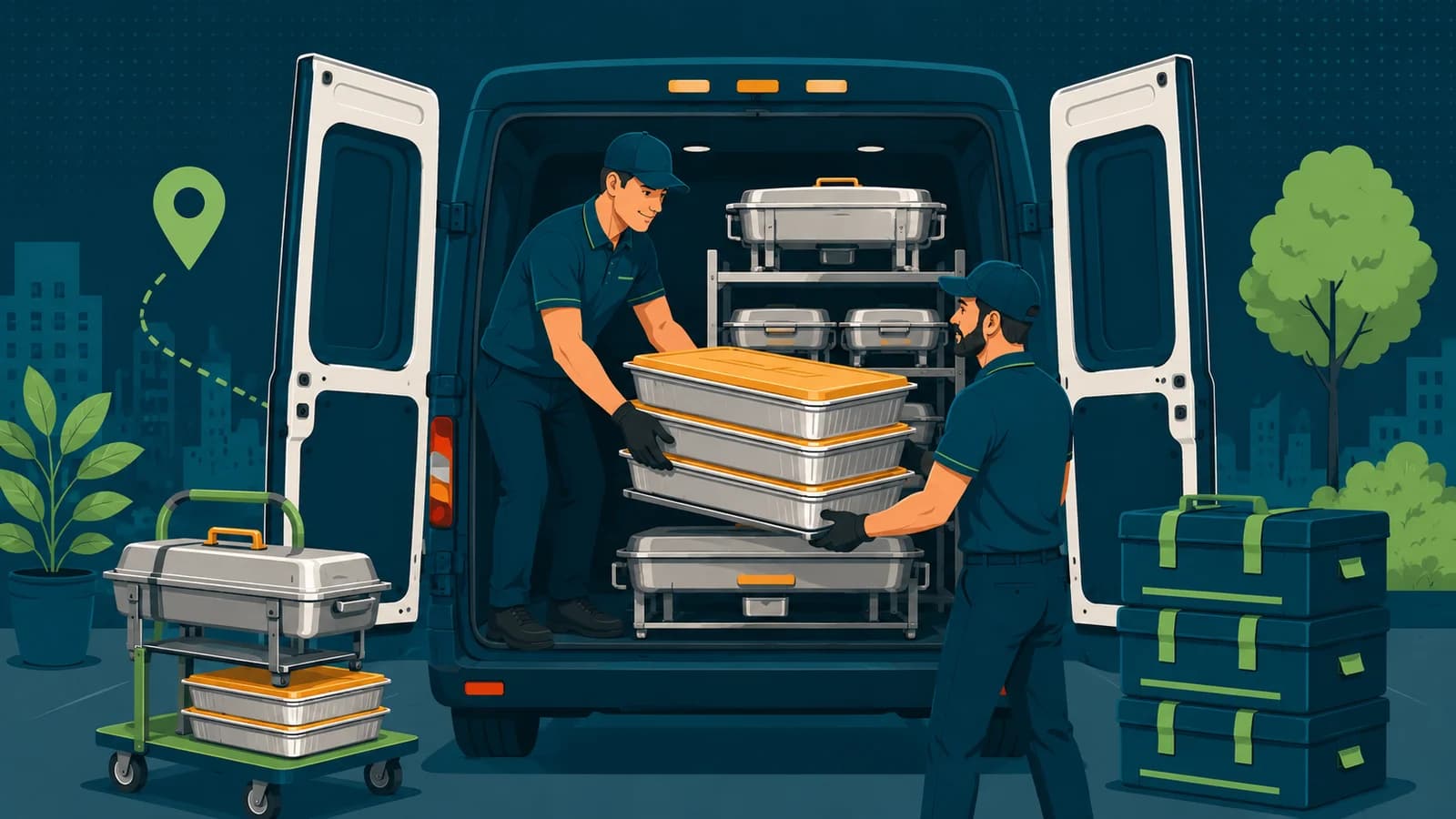
A $40 lunch order that arrives late is an annoyance. A $400 catering order that arrives late — or arrives damaged, or arrives to the wrong location — can cost you the client.
Catering delivery operates under different rules than regular restaurant delivery. The stakes are higher, the logistics are more complex, and the delivery experience is often part of what the customer is paying for.
If you are adding catering delivery to your business or trying to fix a system that is not working, here is what you need to know.
Why catering delivery is different
Regular delivery is a handoff: the driver picks up the food, drops it at an address, and moves on. Catering delivery often involves more.
Larger orders, more components. A catering order might be 10 trays of food, serving utensils, disposable plates, and ice packs. If any piece is missing, the whole order feels incomplete.
Tighter timing windows. A lunch delivery that arrives at 12:15 instead of 12:00 might be fine. A catering order for a 12:00 meeting that arrives at 12:15 is a problem — the client is standing in front of their colleagues waiting for food that is not there.
Setup expectations. Some catering orders need to be placed on a table in a specific arrangement. Others just need to be handed off. Clarifying this before the driver leaves your kitchen saves awkward phone calls.
Higher visibility. When something goes wrong with a $15 order, one customer is unhappy. When something goes wrong with a catering order, a roomful of people notices.
The three ways businesses handle catering delivery
Using a marketplace platform. Some businesses route catering orders through DoorDash Drive or Uber Direct. The advantage is convenience — if you already use the platform, it is one less system to manage. The disadvantage is that marketplace drivers are optimized for speed, not care. A driver juggling three stops may not treat your stacked trays the way you would.
Hiring in-house drivers. Full control, but full cost. You need to cover wages, vehicle costs, and the scheduling complexity of having enough drivers available when catering orders come in — which is often unpredictable.
Using a dedicated delivery service. Services like UniHop let you request Special Handling delivery for catering orders, which assigns a dedicated driver who handles only your order from pickup through delivery. No shared routes, no juggling multiple stops. The driver can also handle basic setup if you communicate what is needed.
Most catering operations use some combination of these, depending on order size, distance, and how much margin they have to work with.
What to clarify before the driver leaves
The handoff between your kitchen and the driver is where most catering delivery problems start. Build a quick checklist:
- Delivery address and any access instructions. Office buildings often require check-in at a lobby. Event venues may have a specific loading entrance.
- Contact name and phone number. Not just the company — the actual person who will receive the order.
- Delivery time window. Is there flexibility, or does the order need to arrive at exactly 11:45?
- Setup requirements. Does the driver just hand off the order, or are they setting up trays on a table?
- Item count. Confirm the number of bags, trays, and containers before the driver leaves. Missing items are easier to catch in your kitchen than at the destination.
If you are using a delivery service, communicate these details when you request the delivery — not as an afterthought once the driver is already en route.
Pricing catering delivery correctly
Catering delivery costs more than regular delivery, and you should charge for it.
Many businesses bake delivery into the catering price as a line item. Others offer free delivery above a minimum order threshold. Either works, as long as you have accounted for the actual cost of getting the order there intact and on time.
If you are using a dedicated delivery service, the per-delivery cost is predictable. UniHop's pricing for Special Handling delivery includes a dedicated driver with no shared routes — which is what catering orders need.
Underpricing delivery to win the order and then scrambling to fulfill it cheaply is how catering operations end up with angry clients and thin margins.
When to say no
Not every catering request is a good fit for delivery.
If the destination is 45 minutes away and the client wants the food to arrive hot, that may not be realistic — and promising it sets you up to fail.
If the setup requirements are complex — full buffet service, chafing dishes, staff to serve — that is an event, not a delivery. Some catering operations handle both, but they require different logistics and pricing.
If the order value does not justify the delivery cost, it is better to be honest than to lose money or cut corners.
Knowing when to decline — or when to price the order correctly for what it requires — protects your reputation and your margins.
A practical starting point
If you are just adding catering delivery or trying to improve an existing operation:
- 1Separate catering orders from regular delivery. Do not route a $500 catering order through the same system as $20 lunch orders. The handling requirements are different.
- 2Use a checklist for every catering handoff. Confirm item count, delivery instructions, and contact information before the driver leaves.
- 3Price delivery into the order. Do not absorb delivery costs hoping to make it up on volume.
- 4Choose drivers who understand the stakes. Whether in-house or through a service, catering drivers should know that a late or damaged delivery is not just an inconvenience — it affects your client's event.
Catering delivery is not harder than regular delivery, but it is less forgiving. Getting the fundamentals right makes the difference between repeat clients and one-time orders.
Need delivery you can count on?
UniHop handles last-mile delivery for local businesses — no contracts, no commissions.
Talk to Sales