

Operations
5 Ways to Reduce Delivery Costs Without Cutting Corners
Delivery costs add up fast. Here are five practical ways to bring them down without sacrificing reliability or customer experience.
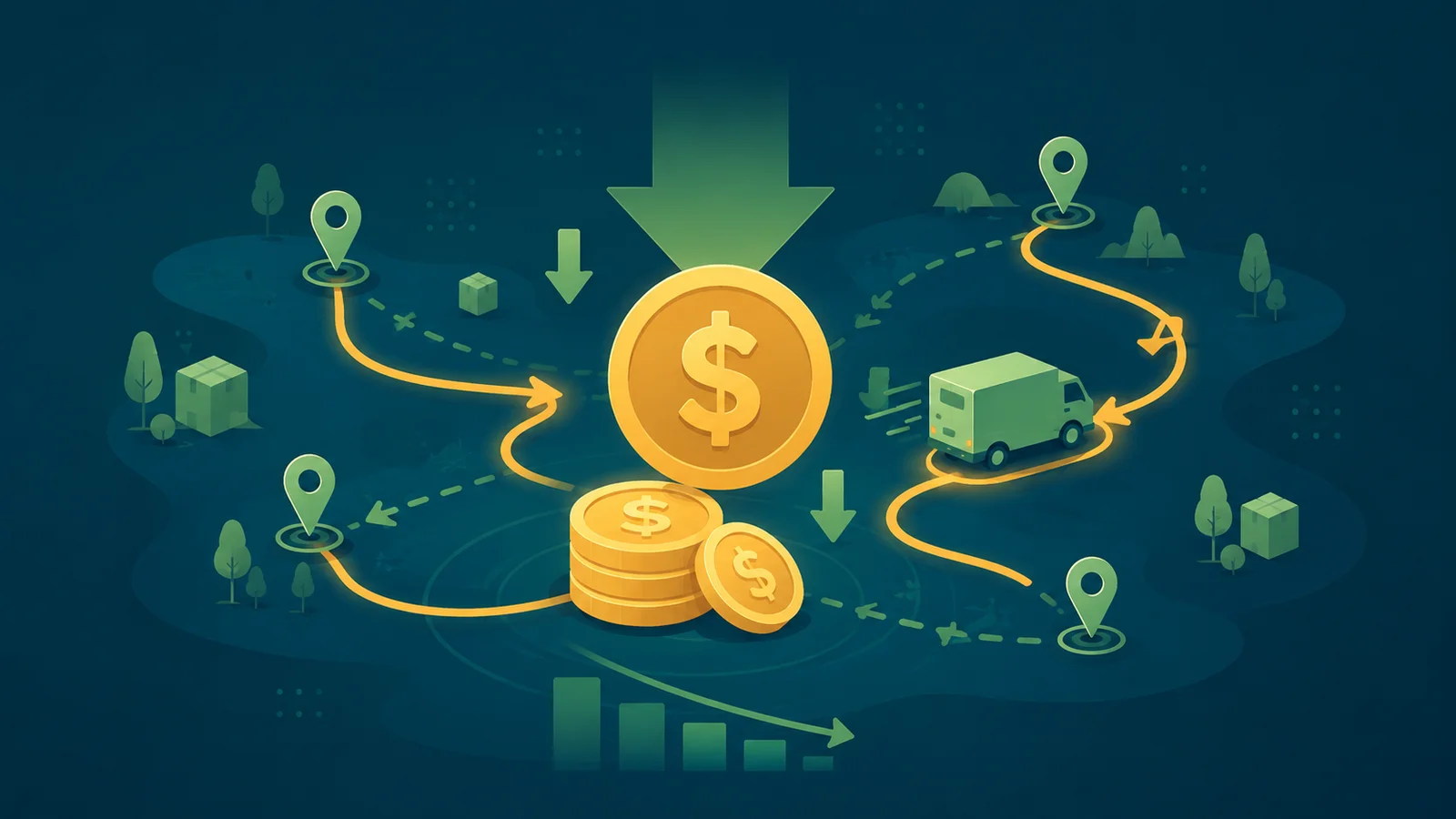
Delivery is often the most variable cost in a business's operations. A restaurant that does 50 deliveries a day at $12 each is spending over $200,000 a year on delivery alone. A retailer shipping local orders might not realize how quickly per-order delivery fees add up until they run the annual numbers.
The goal is not to eliminate delivery costs — it is to make sure you are not overpaying for what you actually need.
Here are five ways to reduce delivery costs without making your customers pay the price.
1. Understand what you are actually paying
Most businesses know their per-delivery fee but have not calculated their true cost per order.
If you are using a marketplace platform like DoorDash or Uber Eats, you are paying 15-30% commission on every order. A $50 order with a 25% commission costs you $12.50. On a $100 order, that is $25 gone before you ship anything. Customers also pay platform fees on their end, but the commission comes straight out of your margin.
Per-delivery pricing — a base fee plus a per-mile rate — is more predictable. You pay the same amount whether the order is $30 or $300. For businesses with higher average order values, this model almost always costs less per order than commission-based pricing.
Run the math on your last 100 deliveries. Compare what you paid under your current model to what you would have paid under a base-plus-per-mile model. The difference might surprise you.
2. Match the delivery style to the order
Not every delivery needs the same level of service — and paying for more than you need is where costs creep up.
Standard delivery routes orders through available drivers, often with multiple stops. It is the most cost-effective option for individual orders that do not require special handling.
Special Handling delivery assigns a dedicated driver for the entire trip — no shared routes. It costs more, but it makes sense for catering, fragile items, or high-value orders where you cannot afford a mistake.
The problem is when businesses default to premium service for orders that do not need it, or when they use the cheapest option for orders that require more care and end up paying in refunds and lost customers.
Segment your orders by value and handling requirements. Use Standard for everyday deliveries and reserve Special Handling for the orders where it matters.
3. Set delivery zones that make sense
Expanding your delivery radius sounds like a growth strategy, but every additional mile costs money — and at some point, the delivery cost exceeds the margin on the order.
Look at where your deliveries actually go. If 80% of your orders are within 5 miles and 10% are 15+ miles away, you are probably subsidizing distant deliveries with margin from closer ones.
Options:
- Charge distance-based delivery fees. Customers ordering from farther away pay more. This is transparent and lets you serve a wider area without losing money.
- Set a delivery boundary. Decide on a radius that makes economic sense and stick to it.
- Offer different service levels by zone. Close deliveries get same-day; distant ones get next-day or scheduled windows.
The goal is not to turn away business — it is to price delivery so that distant orders are still profitable.
4. Batch orders when possible
Sending one driver for one order is the most expensive way to deliver. Batching multiple orders on a single route reduces the per-order cost.
This works best for:
- Scheduled deliveries. If customers can select a delivery window (e.g., "between 2-4 PM"), you can group orders going to the same area.
- Recurring routes. Businesses with regular deliveries to the same locations — meal prep, office lunch programs, wholesale restocking — can schedule multi-stop routes that are more efficient than individual dispatches.
The trade-off is speed. Batching requires flexibility in delivery timing, which not every customer will accept. But for orders where timing is flexible, batched routes cost significantly less per stop than individual ASAP deliveries.
UniHop supports multi-stop routes with any vehicle type, letting you schedule recurring or grouped deliveries at a lower per-order cost.
5. Stop paying for discovery you do not need
Marketplace platforms charge high commissions because they provide two things: delivery logistics and customer discovery. You are paying for both whether you use both or not.
If your customers already know you — they order from your website, call your store, or use your app — you are paying a discovery fee for customers who were already yours. That is where dedicated delivery services make more sense.
With a dedicated service, you keep the customer relationship and the margin. The platform does not upsell your competitors to your customers or own the transaction data.
The hybrid approach many businesses use: keep a marketplace presence for new customer acquisition, but route direct orders through a dedicated delivery service like UniHop. You pay for discovery when you need it and avoid the commission when you do not.
The math adds up
Delivery costs are not fixed. They are the result of choices — about pricing models, service levels, zones, routing, and which channels you use for which orders.
Small improvements in each area compound. Switching from commission to per-delivery pricing might save 10%. Matching service levels to order types might save another 10%. Batching scheduled orders could reduce per-order costs by 20-30%.
Run the numbers on your own delivery operation. Identify where you are overpaying, and fix it without cutting the quality your customers expect.
Need delivery you can count on?
UniHop handles last-mile delivery for local businesses — no contracts, no commissions.
Talk to Sales