

Delivery Strategy
DoorDash vs. Dedicated Delivery — What's the Actual Difference?
DoorDash is a marketplace. Dedicated delivery is infrastructure. They solve different problems, and conflating them leads businesses to make the wrong choice for their situation.
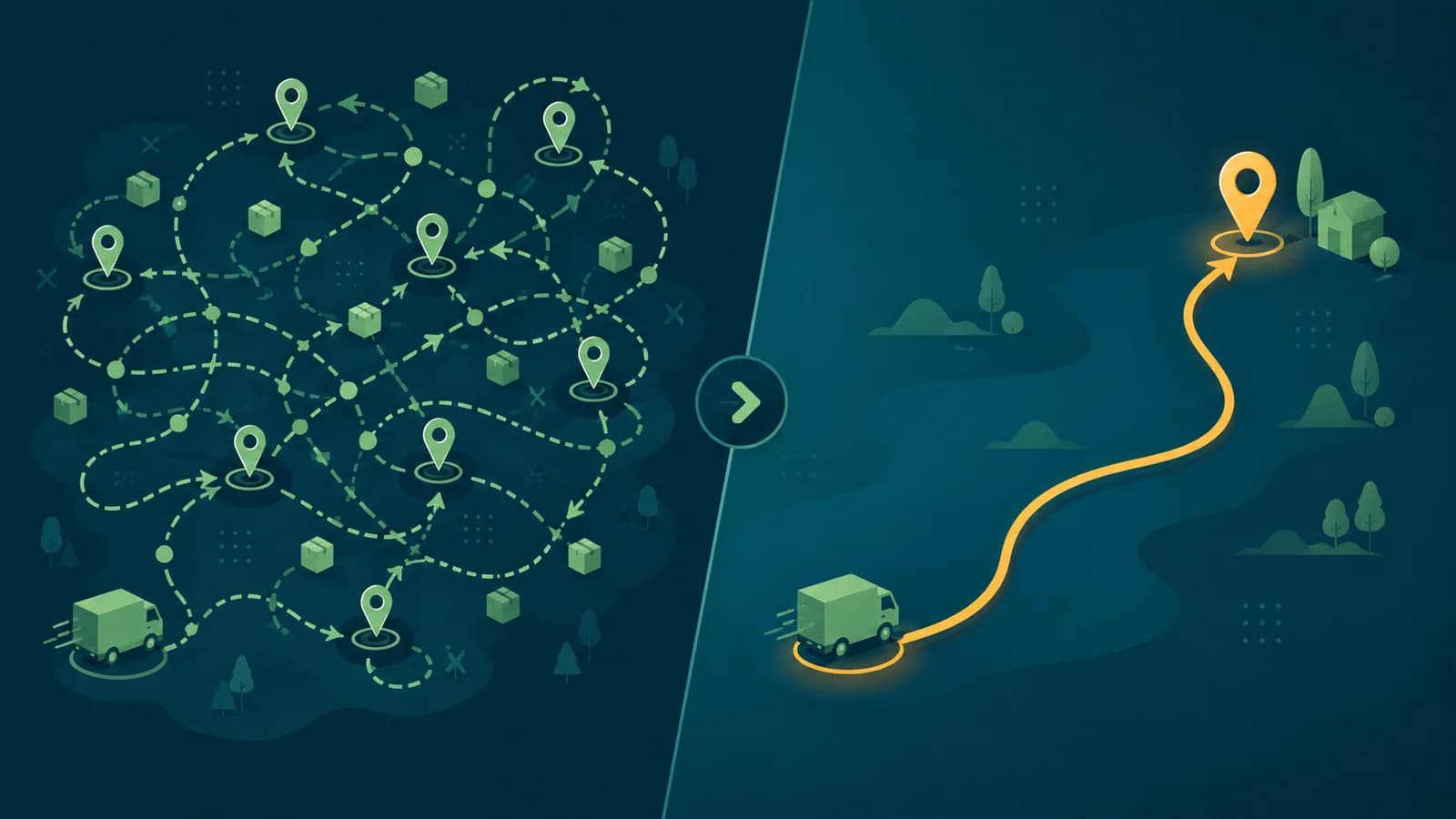
DoorDash is the most visible delivery option available to most local businesses. That visibility creates a perception problem: many businesses assume DoorDash-style marketplace delivery is what "delivery" means, when it is actually one specific model with specific tradeoffs.
Dedicated delivery is a different model. Understanding what separates them helps you pick the right tool for what you are actually trying to do.
What DoorDash actually is
DoorDash is a consumer marketplace. Its primary function is connecting hungry customers with restaurants through an app they already have on their phone. When a restaurant joins DoorDash, it gets listed in a catalog alongside competitors, and DoorDash's algorithm determines how prominently it appears.
DoorDash also operates DoorDash Drive, a white-label delivery API that lets businesses fulfill orders without appearing on the consumer marketplace. Drive is a closer equivalent to a dedicated delivery service — but it is still a marketplace product at its core, with marketplace pricing and infrastructure.
The core DoorDash model charges a commission on every order. Depending on the plan, that is typically 15–30% of the order subtotal. On a $50 order, you might pay $10–15 per delivery before considering packaging, labor, or food cost.
What dedicated delivery is
A dedicated delivery service provides logistics infrastructure — drivers, dispatch, tracking, and confirmation — without a consumer-facing marketplace. You bring your own orders. The service handles fulfillment.
The relationship with the customer stays with you. Your branding can appear on the tracking page. Pricing is typically per delivery, not a percentage of the order, so a $50 order and a $150 order cost roughly the same to deliver.
Dedicated services vary in what they include. Some are fully automated. Others include human dispatch teams that monitor orders and intervene when something goes wrong. Coverage varies by geography. Some are optimized for restaurant food; others handle oversized items, catering, or pharmaceutical delivery.
Where the models differ
Who is the customer acquiring you, or are you acquiring the customer?
On DoorDash, the platform acquires customers and sends them to you. You pay a commission partly for logistics and partly for discovery. If a customer finds you through DoorDash, DoorDash owns that relationship — they can show your competitor in the next search.
With dedicated delivery, you run delivery through your own channels. Customers come to you directly. The delivery service is invisible to them except for the tracking link. You build your customer database; the delivery service builds nothing from it.
How pricing scales
Marketplace commissions scale with your order value. A restaurant with a $20 average order pays less per order than one with a $60 average order — but the $60 restaurant gets less value from the marketplace traffic to justify the higher cost.
Dedicated delivery uses per-delivery pricing. A short delivery and a long-distance delivery cost different amounts based on distance and delivery style, but neither scales with the dollar value of what is being delivered. This makes per-delivery pricing much more predictable for businesses with variable order values.
What happens when something goes wrong
On DoorDash, customer complaints go through DoorDash's support system. You often find out about a delivery problem through a negative review, not a proactive alert. The platform controls the resolution.
On a managed dedicated service, the delivery is monitored in real time. When a driver goes offline, misses a stop, or cannot reach a customer, the dispatch team can intervene before the customer notices. You stay informed. UniHop's operations team monitors orders from 5 AM to midnight, with orders accepted 24/7/365.
Control over the delivery experience
DoorDash controls the customer-facing experience entirely. The app, the tracking page, the driver rating system, and the support interaction all carry DoorDash branding and operate under DoorDash policies.
Dedicated delivery lets you determine what the customer sees. If you have a preferred tracking message, a delivery confirmation format, or a need for signature on delivery, you can build that into the workflow. Your brand is on the experience.
When DoorDash makes sense
Marketplace delivery genuinely makes sense in specific situations:
- You want to reach new customers who are browsing the app and do not know your business yet
- Your order values are low enough that the commission is a reasonable customer acquisition cost
- You do not have an existing direct ordering channel and want to start quickly
- You are a new business testing delivery demand before investing in direct channels
The marketplace tradeoff is real: you get distribution, but you pay for it permanently and on every order, including orders from customers who already know you.
When dedicated delivery makes more sense
Dedicated delivery is the better fit when:
- You already have customers ordering directly — through your website, app, or by phone — and you want to fulfill those orders without paying a commission
- You run catering, high-value retail, or other delivery types where order values make commission percentages expensive
- You want your branding on the customer experience, not DoorDash's
- You are delivering items that require careful handling — fragile goods, oversized items, temperature-sensitive orders
- You want a dispatch team monitoring every order rather than a fully automated system that surfaces problems after the fact
UniHop is built for this use case. See how it works or compare UniHop and DoorDash side by side.
The practical question
For most businesses, the question is not DoorDash or dedicated delivery — it is what role each plays.
Marketplace delivery is a customer acquisition channel with a built-in commission. Dedicated delivery is fulfillment infrastructure for orders you already own.
If you are using DoorDash to fulfill orders from your own customers, you are paying acquisition costs on relationships you already have. That is worth examining.
Need delivery you can count on?
UniHop handles last-mile delivery for local businesses — no contracts, no commissions.
Talk to Sales