

Delivery Strategy
Why Customers Blame You for a Late Delivery
When a delivery arrives late, the review names your shop instead of the driver. Here is why the blame lands on you, and what actually prevents it.
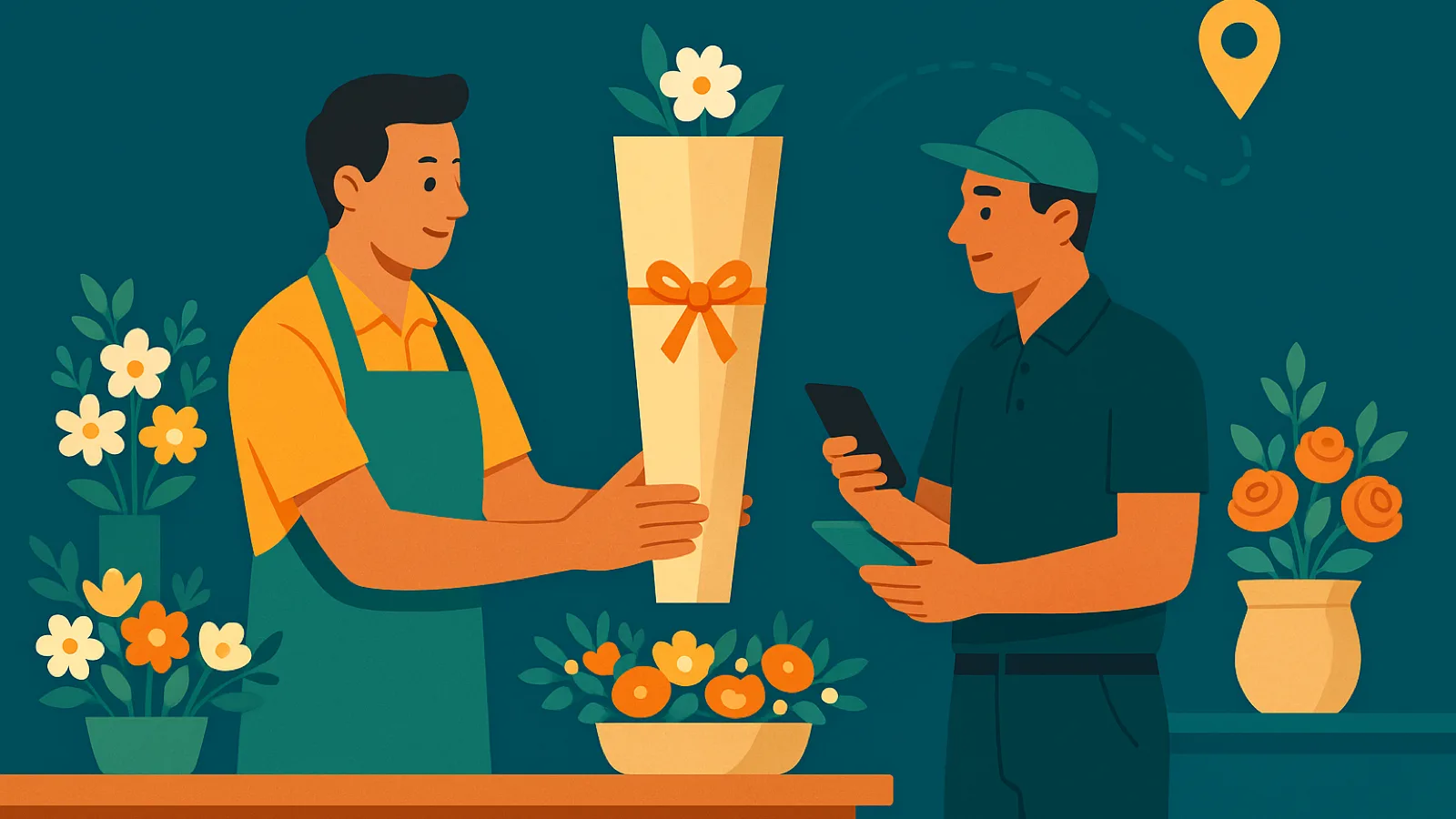
Have you ever had a customer call about an order that arrived late, when the arrangement left your cooler on time and in perfect condition? The delay happened somewhere between your door and theirs, in a stretch of the job you could not see. The review that follows will name your shop.
The delivery is the only part your customer watches
Think about what a customer actually experiences when they order from you.
They talk to you on the phone or place an order through your site. Then there is a gap of several hours where nothing is visible to them at all. Then a person arrives at a door somewhere across town.
That arrival is the only part of your operation the customer sees directly. The sourcing, the conditioning, the arrangement itself, the care you took getting it boxed so it would survive the trip: all of it is invisible. The handoff at the door is not. For the person receiving it, the delivery *is* the product.
When it goes well, they credit your shop. When it goes badly, they blame your shop. That asymmetry is worth planning around rather than resenting.
Why the blame lands on your shop
Customers form relationships with businesses, and they have no view into the chain behind one. They know they paid you, and that what they paid for showed up late.
This gets sharper for florists than for almost anyone, because the delivery windows that matter are the ones nobody can reschedule. A funeral starts when it starts. A wedding does not wait. Late on a Tuesday afternoon delivery is an inconvenience, and late to a service is a permanent memory attached to your name.
Uncertainty is what turns a delay into a complaint
Most delivery complaints are not really about lateness. They are about not knowing.
A customer who can see that their order is running twenty minutes behind is mildly annoyed. A customer with no idea where their order is, whether it is coming, or who to ask, gets anxious. That anxiety becomes a phone call to your shop, then a refund request, then a review.
Three things close that gap, and they should be table stakes for any delivery you offer. Real-time tracking lets the customer answer their own question without calling you, which removes most "where is my order" inquiries before they start. Status updates as the order moves mean nobody has to wonder. And photo confirmation on arrival settles the most expensive dispute in local delivery, the one where a recipient insists nothing was ever delivered, in about four seconds.
None of that makes a delivery faster. All of it makes the delivery feel controlled, which is what customers are responding to when they say a shop is good about delivery.
Dispatching an order and watching it are different jobs
Most delivery services will dispatch an order. Fewer will watch what happens after they do.
The difference shows up in the twenty minutes when something is going wrong and has not failed yet. A driver has not moved in fifteen minutes. A pickup was accepted and nobody has arrived. An address looks wrong for the neighborhood.
With nobody watching, the first person to notice is your customer, and by then you are apologizing instead of fixing. With someone watching, that window is where problems quietly disappear. The dispatch team contacts the driver directly, and a quick call resolves most of it. For situations that need more, like a breakdown or an order taken to the wrong address, they can send a replacement driver at no additional charge to you. Those are judgment calls rather than automatic triggers, and the practical effect is that somebody makes the call before your customer is affected.
Most of the time you hear about the solution instead of the problem.
What to ask before you hand over a delivery
If you are weighing in-house delivery against a marketplace platform or a managed service, these questions separate them quickly:
- Who is accountable when a delivery fails, and is there a person to reach or only a support ticket?
- Can the recipient see where their order is without calling your shop?
- Is anyone monitoring deliveries while they are in progress, and during what hours?
- Whose name does the recipient see on the tracking link and the notifications?
- Can you match the handling to the order, so a fragile arrangement for a service gets a dedicated driver while routine work costs less?
That last one matters more than it sounds. Special Handling assigns one driver from pickup through drop-off for orders where presentation and timing carry real weight, and routine deliveries can run on a lower-cost style. Paying premium rates on everything is as wasteful as sending your Valentine's Day work out with whoever happens to be closest.
The version that works
Delivery done well is unremarkable. The order arrives, nothing about the experience registers as an event, and no one writes a review about flowers that showed up correctly.
What you get from good delivery is protection. The failure that would have cost you a customer, a public review, and every referral that customer might have made simply does not happen. On a peak day like Mother's Day, when the volume is triple normal and every order is emotionally loaded, that protection is the whole difference between a good week and a reputation problem you spend a year repairing.
Common Questions
Does offering local delivery bring in new customers?
It removes a reason to buy elsewhere. Customers choosing between your shop and a national order-gathering site are weighing convenience against buying local. Same-day local delivery closes that convenience gap, and it lets you serve addresses outside your usual walk-in radius.
Do I need my own drivers to offer reliable delivery?
No. Hiring means payroll, insurance, vehicles, scheduling, and cover for sick days. A managed delivery service handles dispatch and monitoring without that overhead, and it scales with your volume instead of your headcount. There are no contracts or minimums to commit to.
How do I keep my shop's name on the delivery?
Look for a service that puts your branding on the customer-facing pieces. With UniHop, recipients see your logo on the tracking link and your business name in the delivery notifications, so the delivery reads as coming from your shop.
What happens if a delivery goes wrong?
The dispatch team monitors deliveries and contacts the driver directly when something looks off. Most issues resolve with a quick check-in. For situations that need more, UniHop can dispatch a replacement driver at no additional cost, and provides refunds when something cannot be made right.
Peak days are where this gets decided. If Valentine's Day and Mother's Day are the weeks that define your year, get a quote and see what monitored delivery costs against the volume you actually run.
Need delivery you can count on?
UniHop handles last-mile delivery for local businesses — no contracts, no commissions.
Talk to Sales